
Wuta Temple Beijing Ginkgo Guide: Timing, Photos and Route Tips
A practical Wuta Temple Beijing autumn ginkgo guide with when to go, photo spots, subway access, crowd timing, ticket-rule caveats and nearby stops.
Recommended in the Same City
Quick Answer
Wuta Temple, also listed as Beijing Stone Carving Art Museum, is best treated as a compact autumn photo stop near National Library Station, not a full-day attraction. Go for the pagoda-and-ginkgo view, reflection shots and quieter Beijing autumn atmosphere; check current ticket, free-entry and opening-hour rules before leaving because museum rules and seasonal crowd control can change.
Last updated: 2026-06-22.
How I Would Plan This Wuta Temple Ginkgo Stop
| Traveler goal | Best move | Watch for |
|---|---|---|
| Classic ginkgo photos | Arrive early and start around the pagoda and water reflection area | Wind can strip leaves quickly after peak color |
| Low-crowd visit | Try opening time or the late-afternoon window before closing | Do not cut it too close to last entry |
| Easy transit | Use National Library Station and walk from the nearest practical exit | Re-check exits in your map app |
| Nearby add-on | Pair it with Zizhuyuan Park, Wanshou Temple or National Library exterior photos | Keep the route compact; Beijing autumn light fades fast |
Chasing Autumn in Beiping, I’m the First to Rush In
Last Saturday, I got up super early to catch the first quiet wave at Beijing Wuta Temple. On that older visit, I arrived around 9 AM and there were already people ahead of me, so the lesson is simple: check the current ticket and entry rules before leaving, then arrive early if you want clean photos. As soon as I stepped in, two old ginkgo trees “bam!” hit my eyes, their golden leaves spilling like an overturned palette, and I was frozen in place. At that moment, all I could think was: So this is what autumn in Old Beiping really looks like.
I walked around the pagoda three times, and the crunch of leaves under my feet was more soothing than any background music. When the wind blew, ginkgo leaves dropped like rain, and I caught two in my hand, slipping one into my phone case—this fleeting autumn moment needs some proof.
What’s So Great About Wuta Temple
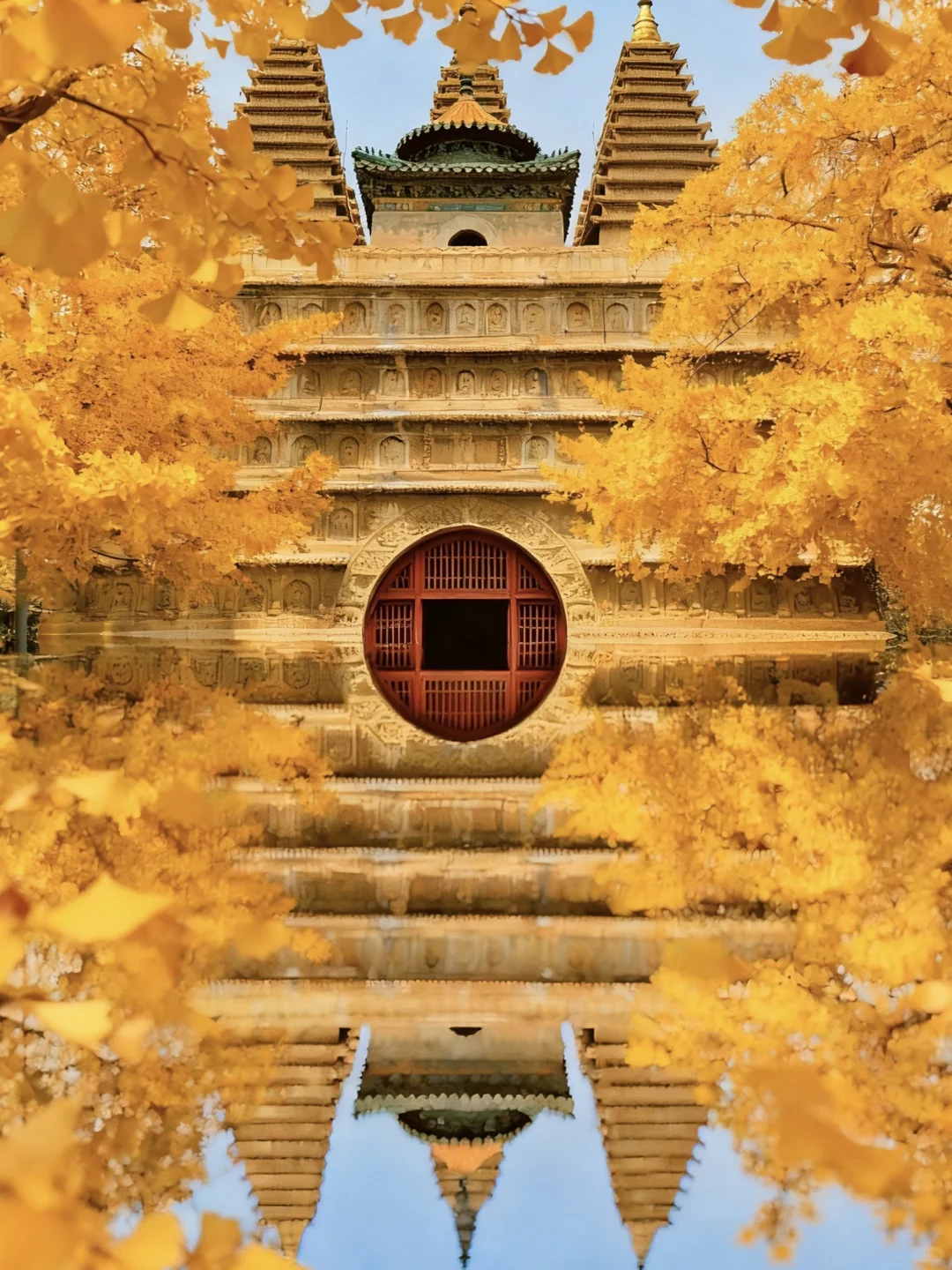
It’s not a big place, just about the size of two football fields, but the combination of ancient pagoda + ginkgo trees + red walls + water pool is way too stunning. The Vajrasana Pagoda is a genuine Ming dynasty relic, with stone Buddhas looking all warm and kind. Looking up, the pagoda eaves and ginkgo branches overlap, like a golden edge set against the sky. The best part is that little water pool behind the pagoda, a rare “water mirror” spot in Beijing’s autumn; when the wind blows, the reflection breaks into starlight, then comes back together like a perfect painting—no matter how you shoot, it never gets old.
My Tested and Effective 4 Photography Tricks
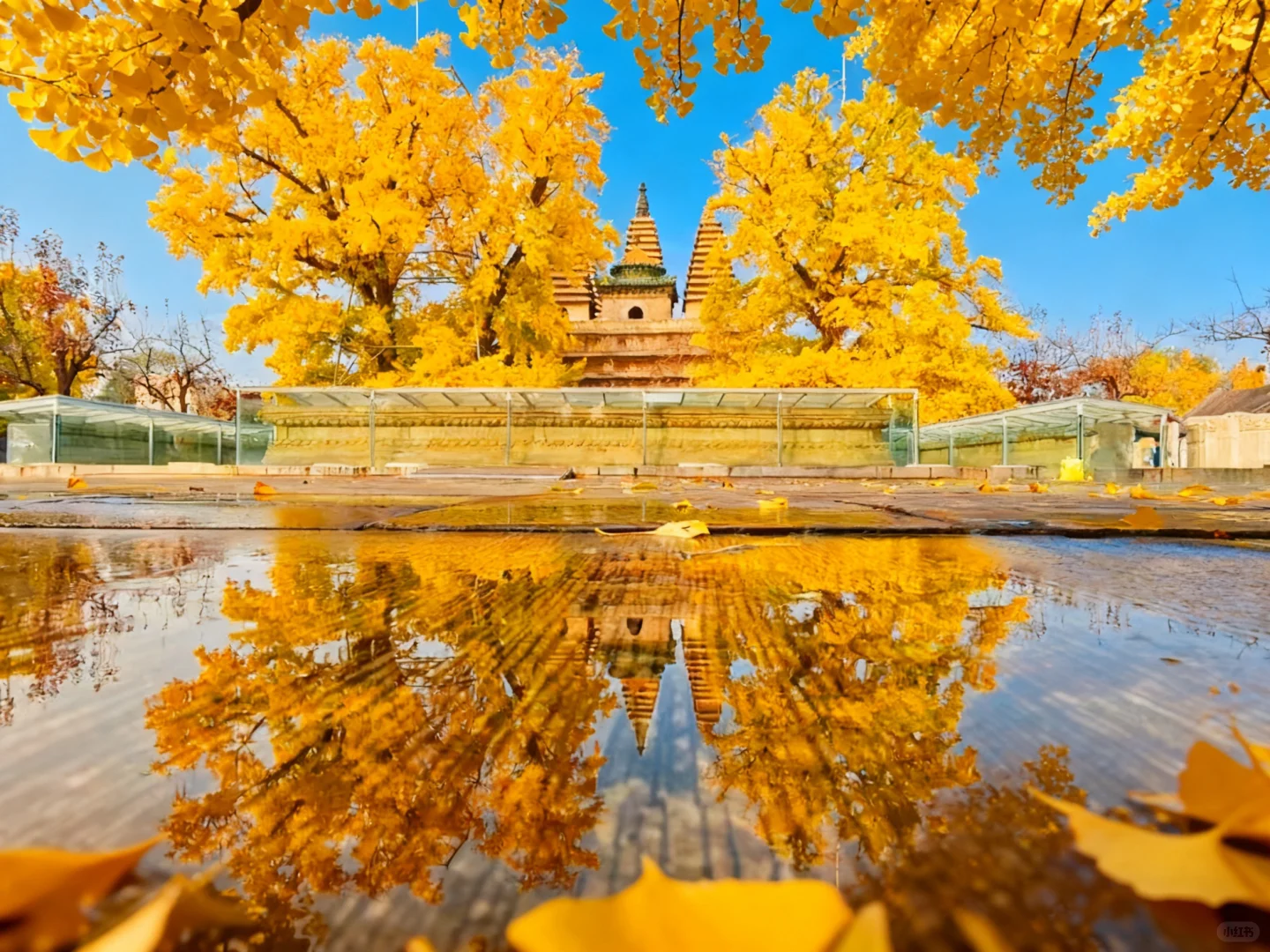
1️⃣ Reflection Kill: Don’t be in a hurry to walk forward after entering; first, look for some puddles. It rained the night before, and there was a puddle on the left at the entrance. I squatted down and put my phone on the ground; the Vajrasana Pagoda and the ginkgo tree reflected perfectly in the water, natural symmetrical filter. No puddles? Just bring a small mirror, put it on the ground at a 45-degree angle, and it’ll still work.
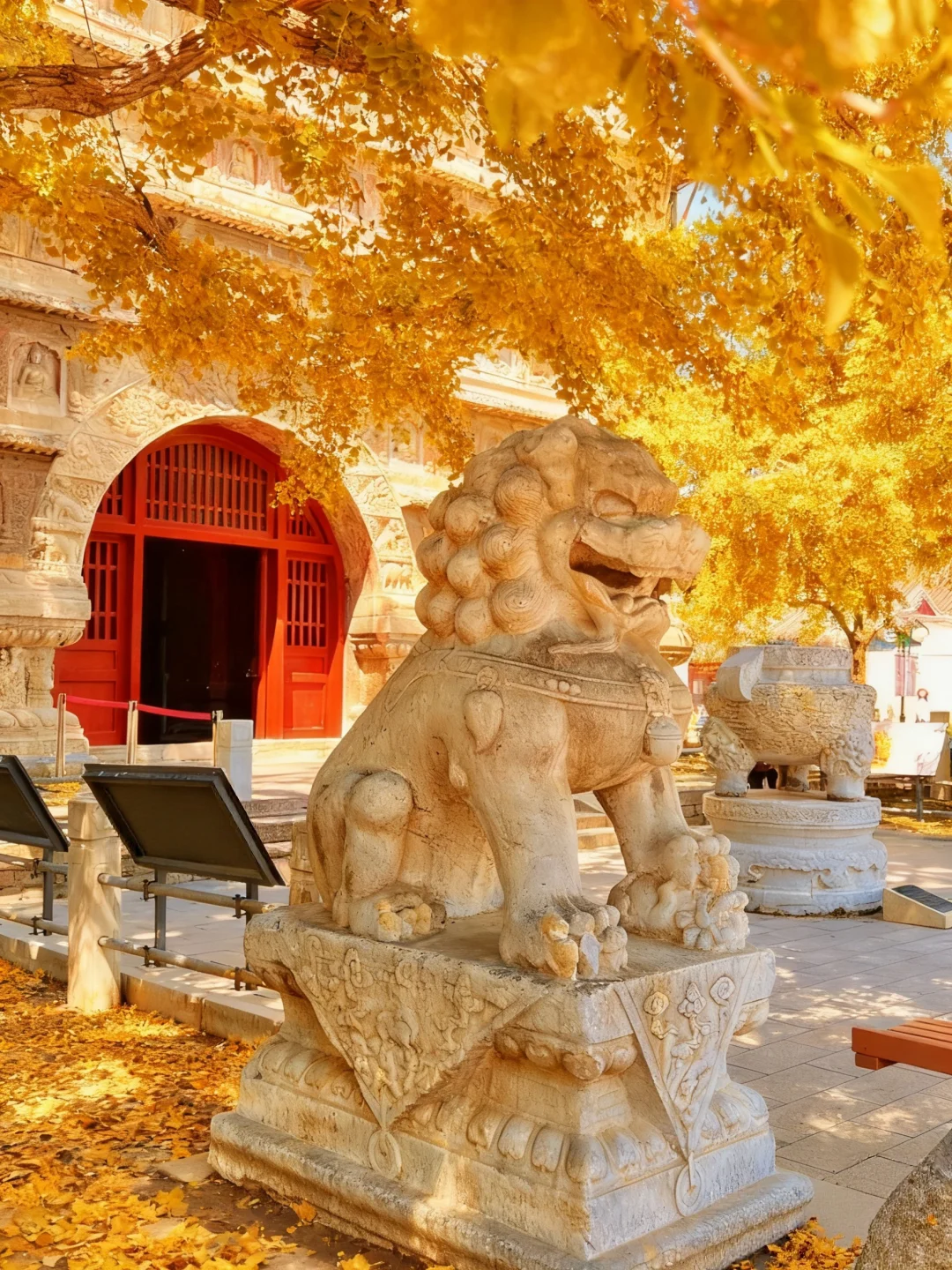
2️⃣ Details in Front of the Pagoda: Get closer to the pagoda; there are leaves all around the stone lions. Lean a ginkgo branch in front of the lens for the foreground, focus on the gaps in the stone lion's teeth, and blur the background into gold—the storytelling vibe skyrockets. Don’t overlook the five little Buddha figures on the pagoda; pick one with good light, frame it with leaves, and shoot in portrait mode to get a background depth that rivals a DSLR.
3️⃣ Water Mirror Technique Behind the Pagoda: Go around to the back; there's a stone by the water pool you can stand on. Put your phone close to the water’s surface, lens slightly tilted, and blue sky + ancient pagoda + ginkgo colors layer together like a postcard. Wait for the wind; when it blows, take rapid shots—you’ll get at least one perfect reflection.
4️⃣ Red Wall Reflecting Autumn: Don’t miss the red wall outside the exhibition hall. Stand at the wall’s base, have a friend stand three meters away, and take a shot with a 2x zoom. The red wall as the background with transparent ginkgo leaves, it naturally softens faces. Around 3 PM, the light is softest, and remember to bring a reflector—the white wall can also act as a reflector.
Super Useful Transportation Info
| Item | Information |
|---|---|
| Address | 24 Wuta Temple Village, Haidian District, Beijing; search for "Beijing Stone Carving Art Museum" or "Wuta Temple" in your map app before leaving |
| Subway | Use National Library Station and walk to the museum entrance; re-check the best exit in your map app because exits and construction detours can change |
| Bus | Use a live transit app for National Library-area stops, then walk to Beijing Stone Carving Art Museum |
| Driving | Navigate to "Beijing Stone Carving Art Museum," but treat parking as uncertain on autumn weekends and keep subway or taxi as the backup |
Thoughtful Little Tips (Learned from My Mistakes)
- Ticket rules: My older visit note recorded a limited Wednesday free-entry window, but do not build your plan around it without checking the current Beijing Stone Carving Art Museum rules first.
- Less Crowded Times: Opening time and the late-afternoon window usually feel calmer, but check current opening and last-entry times before planning a sunset or closing-time visit.
- Mirror: Bring a palm-sized mirror; plastic ones are fine and won’t break, just tuck it in your pocket after shooting, security won’t check.
- Leaf Rain: The leaf rain is at its peak from early November to around November 15; if Beijing has a big wind overnight, it’ll be bare the next day. Keep an eye on the weather forecast and go the day after the wind for a ground covered in golden leaves.
- Nearby Attractions: After visiting Beijing Wuta Temple, keep the route tight with Zizhuyuan Park, Wanshou Temple, or the old red-brick exterior of Beijing National Library. Re-check museum and park ticket rules on the day because prices and access can change.
Caught the Stunning Ginkgo Rain
Last Saturday at 11 AM, suddenly a fierce gust blew, and both ancient trees shook, raining leaves like popcorn. I stood under a tree and shot upwards, my phone snapping 200 pictures, and picked one with a leaf hovering in mid-air to post on Xiaohongshu, and it went viral. I wore a camel-colored coat, and the ginkgo rain softened the view into a creamy filter, capturing the shining moment of Beijing’s autumn.
If you also want to head to Beijing Wuta Temple to collect autumn, don’t hesitate, the ginkgo leaves of Beijing’s autumn won’t wait for anyone; miss this week, and you'll have to wait another year.
Internal Links
- Plan the wider Beijing route: Beijing city guide
- Compare another classic photo stop: Jingshan Park guide
- Add a food stop after the museum: 798 food planning guide
FAQ
When is the best time to see ginkgo at Wuta Temple in Beijing?
The strongest autumn color is usually in the late-autumn window, but wind and weather can shorten it quickly. Use this guide as a route plan, then check recent photos, weather and current Beijing Stone Carving Art Museum rules before going.
How do I get to Wuta Temple by subway?
Use National Library Station and walk to Beijing Stone Carving Art Museum, also known by many travelers as Wuta Temple. Re-check the exact exit in your map app because station exits and construction detours can change.
Is Wuta Temple good for photos?
Yes. It works especially well for pagoda-and-ginkgo compositions, reflection shots near the water, red-wall backgrounds and close-up leaf details. Go early or near the late-afternoon window for fewer people and softer light.
Do I need to check Wuta Temple ticket rules before visiting?
Yes. Free-entry windows, exhibition tickets, opening hours and last-entry times can change, so verify current Beijing Stone Carving Art Museum rules before building the day around it.
Plan Your China Trip
Explore curated city guides and local travel stories to plan your next China itinerary.